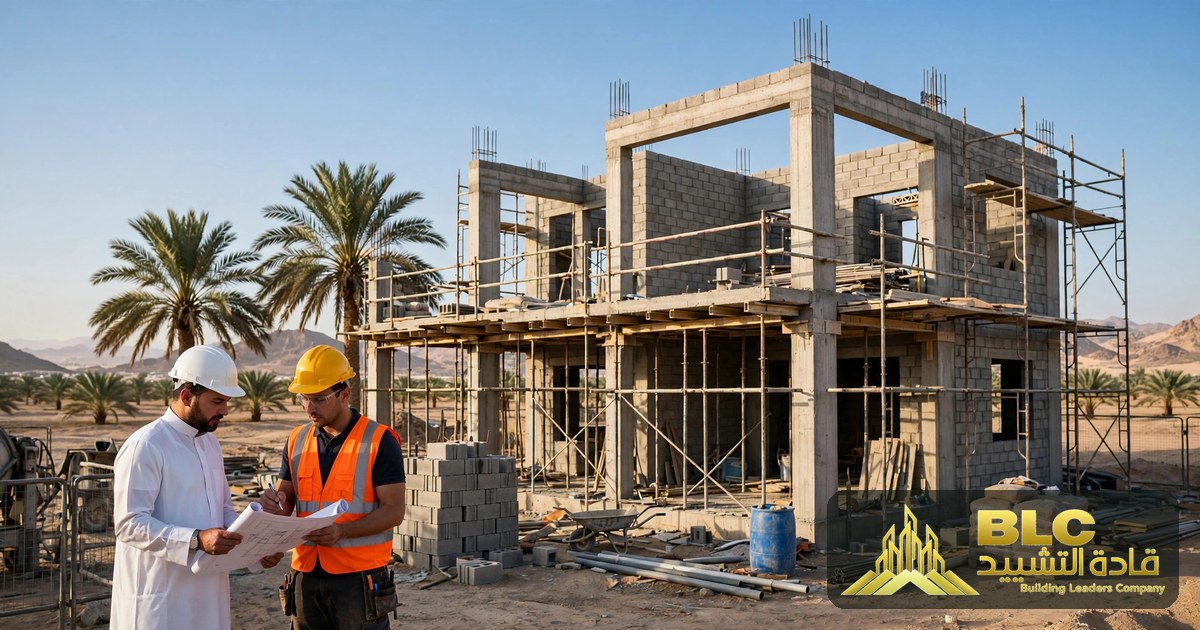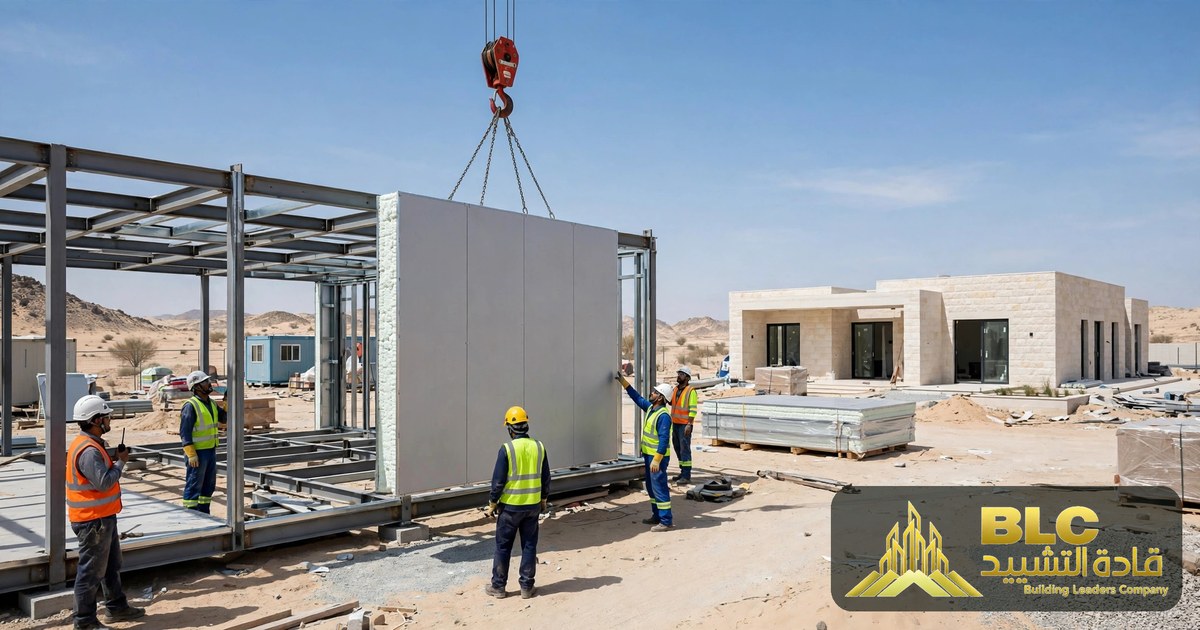
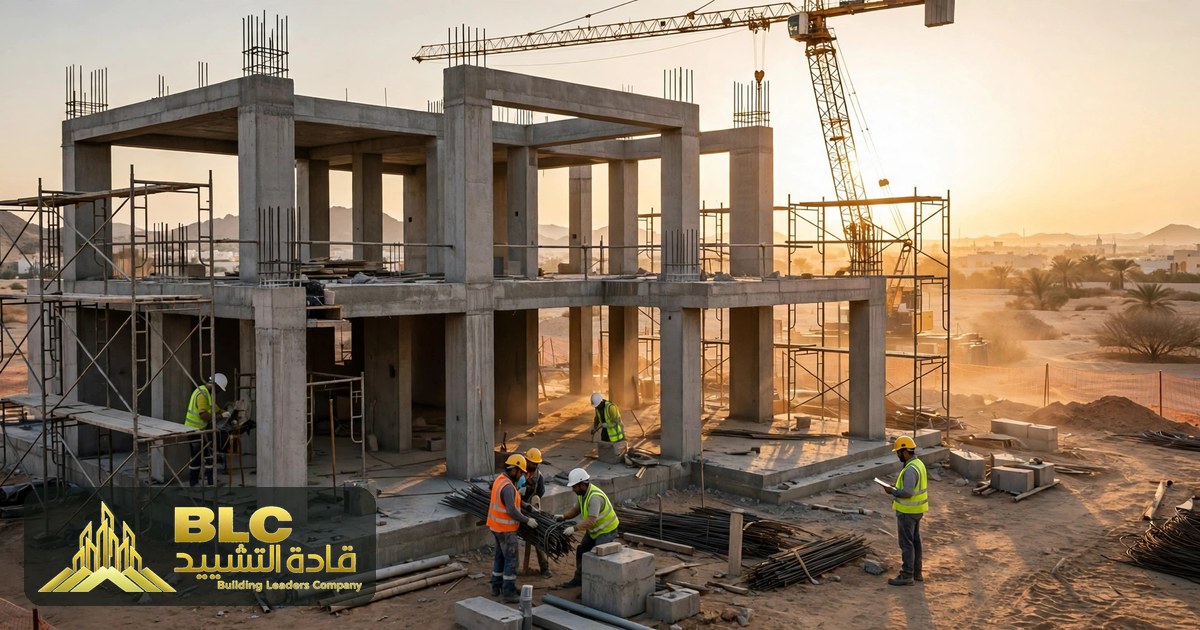
You own land in Madinah and want to build your villa — but which contractor can you trust with your home? Choosing a general contracting company in Madinah is not a price decision alone: it decides your house's quality for decades. This guide covers what such a company does, the building stages, and how to compare quotations.
What Does a General Contracting Company Do?
A general contracting company delivers your project under one management: foundations, concrete structure, blockwork, installations, finishing, and handover. Instead of ten subcontractors, you deal with one party responsible for coordination, quality, and schedule. In Madinah, local experience matters: soil varies by district, and summer heat demands specific insulation and concrete practices.
A good contractor is measured by delivered projects you can visit, not by the size of its advertising.
The Stages of Building Your Villa
- Study and drawings: review the deed and approved plan, investigate the soil, and freeze the design before excavation.
- Foundations: built to the soil report and the engineer's recommendation, with waterproofing against moisture and salts.
- Concrete structure: columns and slabs with written steel and concrete specifications, and regular curing in Madinah's heat.
- Blockwork and installations: walls, then plumbing, electrical, and air-conditioning runs — all tested before plastering.
- Insulation and finishing: roof and wet-area insulation, then plaster, paint, flooring, and doors, to written specifications.
- Inspection and handover: a walk-through against a written checklist, snags fixed before final sign-off.
See also soil investigation before building your villa.
How to Compare Quotations
Never compare the final number alone. Ask for an itemised quotation showing: scope included and excluded, material specifications, duration by stage, a payment schedule tied to verified progress, and how variations are priced.
The cheapest quotation that omits material specifications is not really cheaper — it is incomplete, and you will pay the difference later in repairs.
Ask about supervision too: who is the supervising engineer, and will you get photographed progress reports? Engineering consultancy and clear supervision turn a paper contract into real quality. Also read how to choose a reliable contractor.
Common Mistakes That Cost You After Handover
- Starting before the design is frozen: changes mid-build mean demolition, time, and extra cost.
- Covering installations before testing them: a leak or fault after finishing costs demolition that a simple test would have prevented.
- Neglecting insulation: weak insulation raises air-conditioning bills and shortens the life of finishes.
- Payments not tied to progress: a large upfront payment with no documented stages weakens your position if work stalls.
- A vague contract: every verbal promise without a written clause is hard to prove in a dispute.
The most expensive repair is the one a simple test before finishing would have prevented.
Clauses Your Contract Must Include
Before signing, make sure the contract covers: full scope, material specifications, duration, payments tied to documented stages, variation pricing, and the warranty in writing. For budgeting, see villa building costs in Madinah.
A clear contract protects both sides: you from surprises, and the contractor from out-of-scope requests without payment.
Conclusion: Choose the Contractor Before the Price
Price comes after quality and clarity: projects you can visit, a detailed quotation, a clear contract with a written warranty, and payments tied to progress. General contracting at Qadat Al-Tashyeed - BLC is built on exactly that, with finishing works to written specifications.
Build with a contractor who explains every stage before executing it — transparency before construction is the first sign of quality.
Request your free consultation now from the Qadat Al-Tashyeed - BLC team, and let us review your plan and budget before the first excavation.
Individual Contractor vs. Contracting Company: What Really Differs
The real difference between an individual contractor and a contracting company appears during execution and after handover, not in the first quotation. A company works through an integrated team of engineers, supervisors, and procurement staff, so one person absence does not stop the project. Responsibility is institutional: contracts, invoices, progress records, and a written warranty you can actually claim against an established entity.
Inside the project, a serious company manages time and materials as one system. Key materials are approved in writing from samples and specifications before procurement, site stock is stored protected from Madinah intense sun, dust, and seasonal rain, and trades are sequenced strictly so plumbing, electrical, insulation, and finishing never undo each other work. Hidden works are inspected and photographed before they are covered.
After handover, the relationship continues through a defined warranty and follow-up process: a clear channel for reporting observations, logged dates, scheduled inspections, and verified closure of each item, with a fair distinction between execution defects and later owner modifications or misuse. For villa-scale projects with many interdependent trades, this organisational structure materially reduces risk, delay, and post-handover disputes.
Frequently Asked Questions
Is a company always more expensive?
Not on total cost. A lower individual quote can grow through stoppages, rework, and weak warranty cover. Compare scope, commitments, and guarantees, not just the first figure.
What does material approval before procurement mean?
Samples and specifications are approved in writing before purchase, so non-matching materials never reach the site and delay the works.
How should I report a defect after handover?
Document it with photos and the date it appeared, send it through the agreed channel, and expect a logged inspection, repair, and closure follow-up.