You bought the plot, approved the drawings, and you are eager to start digging. But one step, if you skip it, can cost you for the life of the villa: soil investigation. Land that looks flat and solid can hide weak sand, swelling soil, or shallow groundwater — later showing up as cracks and settlement.
Why Madinah soil changes from one district to another
Madinah's geology varies sharply: hard igneous rock, harraat basalt, and sandy or clayey wadi deposits. Your neighbour's plot therefore says nothing about yours.
Your neighbour built on rock and you are building on sand? The same foundation design cannot serve both. This is why the Saudi Building Code for soil and foundations (SBC 303) requires a soil study before foundation design — see also our guide to villa building permits in Madinah.
What exactly is a borehole report?
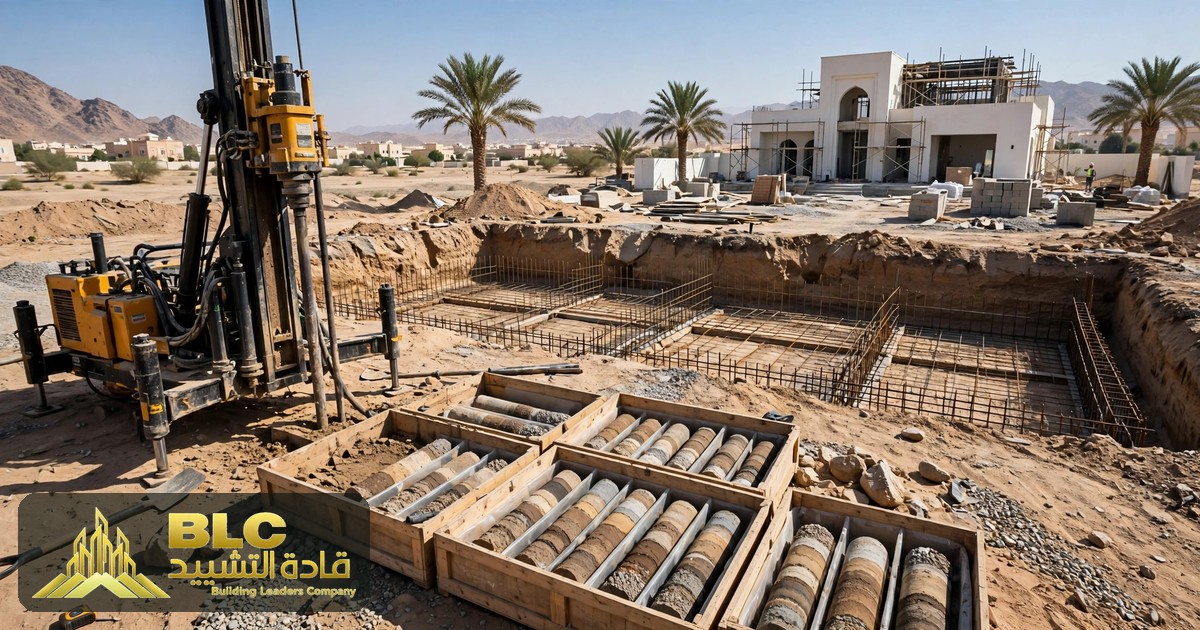
A borehole report comes from drilling two to four exploratory boreholes on a villa plot, sampling every layer for laboratory testing.
A good report answers four questions: the layers and their depths, the bearing capacity, groundwater depth, and salts or sulphates attacking concrete and steel.
A report that does not answer all four questions — layers, bearing capacity, groundwater, and salts — is incomplete. Do not build on it.
Soil investigation step by step
- Site visit: the engineer inspects the plot and fixes borehole locations.
- Drilling and sampling: the rig drills to a bearing layer; samples are boxed by depth.
- Field and laboratory tests: penetration and moisture tests, then lab tests for bearing, swelling, and salts.
- Report and recommendation: a geological section and a clear foundation recommendation.
Foundation types — and when the engineer chooses each
Foundation choice follows directly from the soil report and the loads, not from taste or contractor habit.
- Isolated footings: for strong shallow soil — the common, economical villa choice.
- Strip footings: under load-bearing walls or on medium soil.
- Raft foundation: a full slab, the answer on weak or variable soil.
- Deep foundations (piles): reaching a deep strong layer on very weak ground — costlier, but safe.
The cheapest foundation is not always the most economical: a cheap foundation on weak soil means settlement, cracks, and repairs many times the price difference.
Five warning signs in your report never to ignore
- Swelling or collapsible soil: swells with water and shrinks dry, cracking floors unless designed for.
- Groundwater near founding level: demands special waterproofing, or damp becomes permanent.
- High salts and sulphates: attack concrete and steel, requiring resistant cement.
- Large bearing differences between boreholes: one part settles more than the rest — engineers then favour a raft.
- Old fill or uncompacted soil: must be removed or treated first.
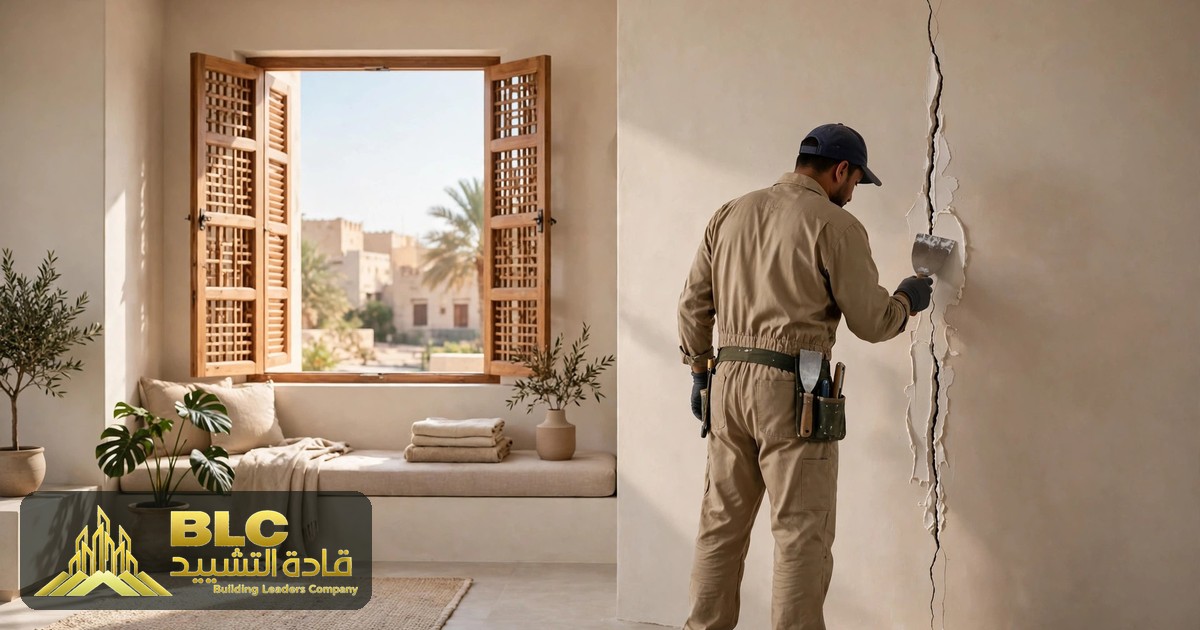
See also our guide to wall cracks: when are they dangerous?.
What does soil investigation cost — and what does it save?
For a villa, investigation is a tiny fraction of foundation cost — far smaller than fixing settlement after finishing.
A soil report is the cheapest insurance you can buy for your villa: a small fraction of foundation cost, while fixing a foundation mistake can cost many times more. See villa building costs in Madinah.
Common mistakes owners make before digging
- Copying a neighbour's report: soil changes within metres; a report belongs to one plot.
- Digging before the recommendation arrives: then changing type means re-excavation.
- Neglecting tie-beam waterproofing: even a correct foundation deteriorates without sound insulation.
- Choosing the contractor before the engineer: the engineer sets it; the contractor builds it.
Conclusion: build on information, not assumption
Your villa stands on its foundation before it stands on its walls. One correct report protects your investment for decades.
If you own land in Madinah, the team at Qada Al-Tashyeed - BLC will accompany you from investigation through general contracting, supervised by engineering consultancy. Request your free consultation now.