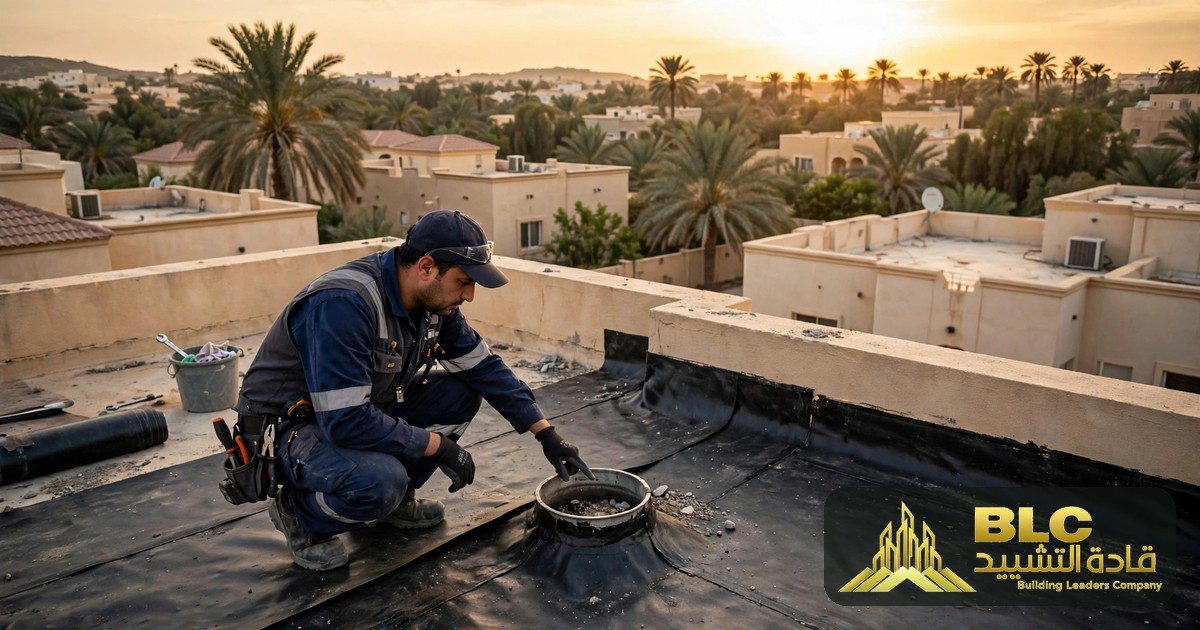
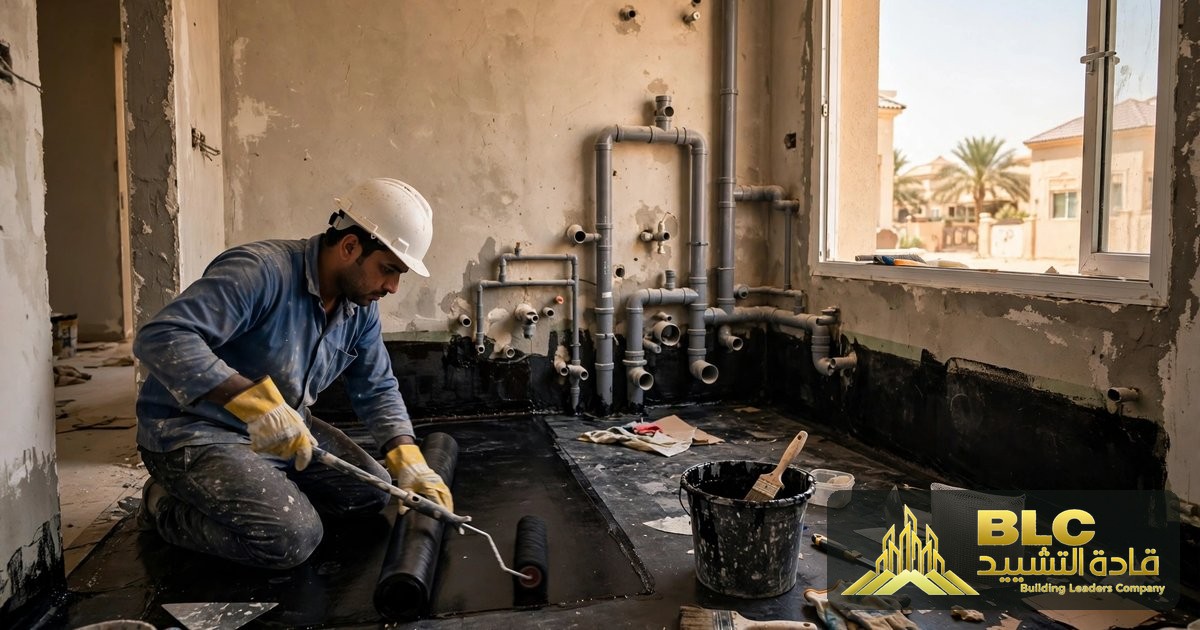
The most frustrating thing for a homeowner: spending good money renovating a bathroom or kitchen, then finding damp patches or leaks under the tiles a few months later. The problem is rarely the new tiles — it's what's hidden underneath.
In Madinah, high temperatures stress plumbing pipes and water quality accelerates joint corrosion, so any waterproofing mistake shows up fast. Renovating wet rooms here needs a methodical, ordered process — not just new tiles on top.
Why Bathrooms and Kitchens Fail First
They are the two wettest rooms in the house, yet the tiles you see are only decoration. The real protection is the waterproofing membrane under the tiles and the integrity of the plumbing network. Most leaks start in corroded joints or unsealed corners from the original build — and new tiles installed over an old problem become its first victim.
The Right Renovation Sequence
Any contractor who starts at step four and skips what comes before is a red flag:
- Inspect plumbing and leaks first: pressure-test pipes and run electronic leak detection. Waterproofing is a protective layer, not a cure for an existing leak.
- Demolish down to the base layer: remove old tiles and damaged plaster completely. Tiling over old tiles just postpones the problem at a higher price.
- Replace old pipework: swap deteriorated pipes for heat-resistant, pressure-rated ones and review the layout before walls are closed. This is the hardest step to revisit later.
- Waterproofing + 48-hour flood test: apply waterproofing to floors and walls (at least 20 cm up), covering every corner and joint — then leave water standing 48 hours to prove zero seepage before any tile goes down.
- Tiles, fixtures, finishing: install ceramics and water-saving fixtures, sealing joints with moisture-resistant materials. This is where professional finishing works make the difference.
Five Mistakes That Ruin Renovations
- Tiling over old tiles: raises floor levels, creates drainage issues, and hides moisture under two layers.
- Skipping the flood test: 48 hours of standing water reveals everything — without it, you're betting on luck.
- Partial waterproofing: waterproofing the floor but not the walls. Water finds the weakest point.
- Old plumbing under new tiles: the most expensive mistake — 15-year-old pipes under new tiles means demolition within two years.
- Choosing materials by price alone: the gap between poor and certified waterproofing is far smaller than the cost of a full re-renovation.
What Does It Cost in Madinah in 2026?
As a rule of thumb: a full bathroom renovation (demolition + plumbing + waterproofing + tiles + fixtures) runs roughly SAR 8,000–18,000, and a kitchen SAR 10,000–25,000 depending on scope. Keep 10–15% as a reserve for surprises found after demolition — and any quote far below market rate should prompt one question: which step did they delete?
When to Hire a Professional Contractor
If the job goes beyond repainting — demolition, plumbing, waterproofing, layout changes — you need engineering supervision, not just labor: a written schedule, warranty on waterproofing and plumbing, certified materials, and stage-by-stage handover.
At Qadat Al-Tashyeed - BLC we renovate bathrooms and kitchens in Madinah with a complete methodology: electronic leak detection, pipe replacement, certified waterproofing systems with flood testing, through to final finishing works and modern design — under one supervision, with a written warranty.
The Bottom Line
A successful renovation isn't measured by how pretty the tiles look on handover day, but by the absence of any problem two years later. The right sequence — inspect, demolish, plumb, waterproof, test, finish — is the difference between a renovation that lasts 15 years and one that sends you back to demolition in a year.
Planning to renovate? Request your free consultation now — we'll inspect, detect, and give you a clear plan with price and timeline before you start.